Prompt library

Prompts that work

Ready-made prompts for ads, logos, posters, 3D and more. Use one in a tap — or share your own.

+ Add a prompt
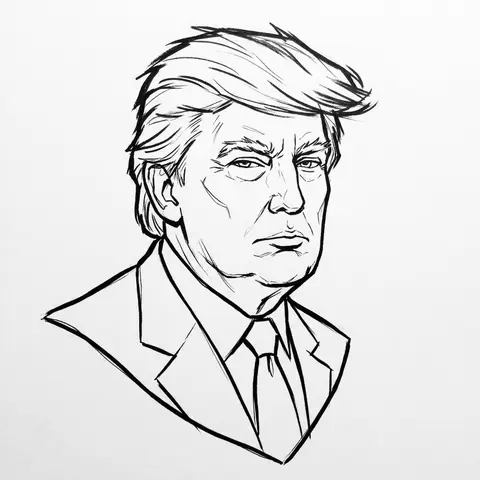
Y2K Monochrome Concept Sketch
2DPhoto

Y2K Monochrome Concept Sketch

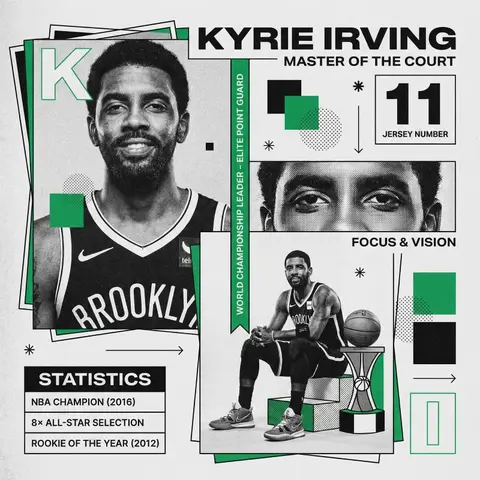
PERSON / CHARACTER NAME or IMAGE. Act as a Lead Concept Artist for a cult classic early 2000s animated series (similar to early Gorillaz or Jet Set Radio). COMPOSITION (FLOATING HEAD DRAFT): Generate a Monochrome Line-Art Concept Sketch of the head/bust of CHARACTER / PERSON . Framing: The head floats strictly in the dead center of the canvas. Orientation: Fixed Three-Quarter View (3/4) for dynamic volume. Negative Space: Generous empty white space around the sketch. VISUAL STYLE (ADVANCED VECTOR SKETCH): The image must look like a Production-Ready Concept Drawing — raw, confident, but polished. NO FILLS (Critical): This is strict LINE ART. Do not use any colors, gradients, or grey fills. The inside of the face, hair, and clothes must be white (transparent), defined only by the outlines. Line Quality (The Inkers Hand): Use Solid Black Ink on pure white paper. Variable Line Weight: Use a THICK, bold contour line for the outer silhouette to pop the character from the background. Use THIN, razor-sharp lines for internal details (eyes, nose, hair texture). Flow: The lines should feel fast and expressive (like a brush pen or sophisticated vector stroke), not shaky or messy. It is an Advanced Draft — distinct and professional. CHARACTERIZATION (THE Y2K VIBE): Stylize the character with slightly angular, edgy features typical of early 2000s street art. Expression: Cool, detached, slightly rebellious, or in the zone. BACKGROUND: Pure White (#FFFFFF). A clean sheet of paper.

durs.ai
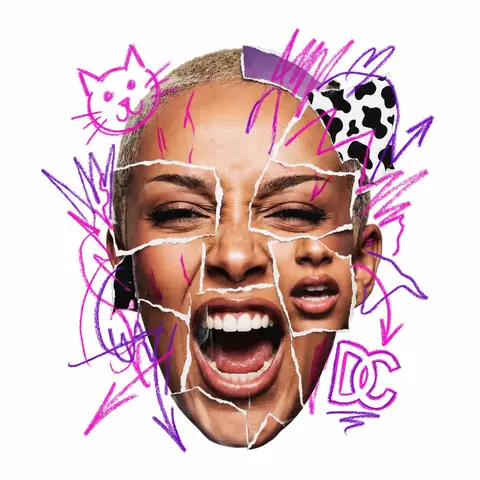
Raw Collage Caricature Portrait
StickerPhoto

Raw Collage Caricature Portrait

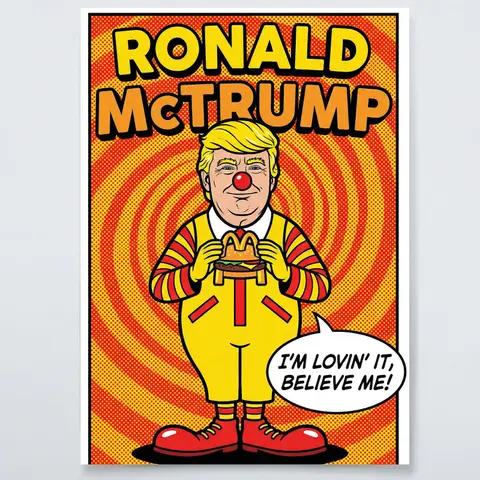
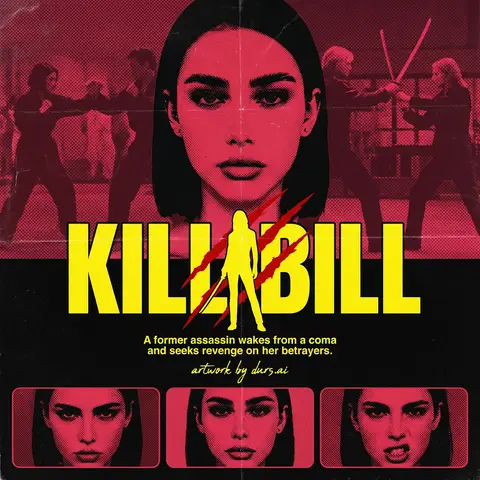
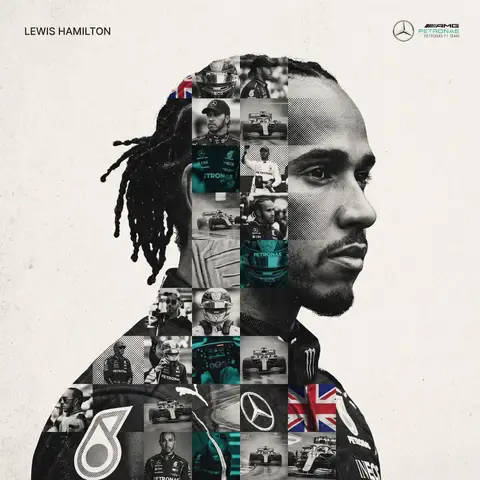
CHARACTER NAME or IMAGE. Act as a radical contemporary mixed-media artist creating a raw, aggressive urban collage portrait. 1. THE SUBJECT (AGGRESSIVE COLLAGE & EMOTION): Generate a hyper-realistic Big-Head Caricature of PERSON / CHARACTER constructed via aggressive photo-montage. Expression (High Energy): The subject must have a visceral, highly charged emotional expression (e.g., roaring laughter, a primal scream, an intensely focused snarl, a manic wide-eyed stare). No passive or neutral faces. The Raw Cut Technique (CRITICAL): The face is NOT a seamless photo. It is a crude assembly of mismatched parts torn from different sources. You must show rough, jagged white paper tear lines and seams where the eyes, mouth, and forehead pieces overlap and are pasted together. The edges must look analog, handmade, and imperfect, like torn magazine pages. 2. THE GRAFFITI EXPLOSION (SMART CONTENT & DYNAMIC PLACEMENT): Over the collage, apply wild, hand-drawn Neon Marker Scribbles. Color & Content Logic (Automatic): Identify the signature color AND 2-3 iconic symbols/logos associated with PERSON / CHARACTER . Draw these specific symbols crudely in the neon color. PLACEMENT (BREAKING BOUNDARIES): The scribble elements must NOT be contained within the face. They must explode dynamically outward, breaking the silhouette of the head and extending wildly into the surrounding white negative space. 3. PHOTOGRAPHY, LIGHTING & TEXTURE: Style: Gritty Street Art meets High-End Photography. Texture: Emphasize the tactile mix of materials: the glossy texture of the photo paper, the fibrous texture of the torn white edges, and the waxy texture of the neon marker. Lighting: Harsh, high-contrast studio lighting that casts hard shadows, emphasizing the layered paper cuts. 4. COMPOSITION: Framing: The photographic head is centered, but the composition feels chaotic due to the exploding scribbles. Background: Pure White (#FFFFFF). Clean, flat, zero texture, providing maximum contrast for the messy collage.

durs.ai
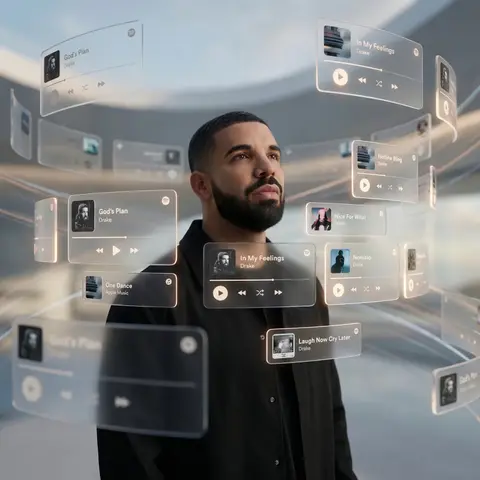
AR Music Interface Portrait
AdvertisementPhoto

AR Music Interface Portrait

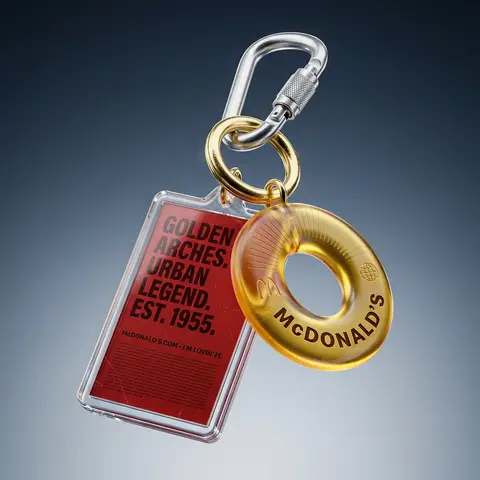
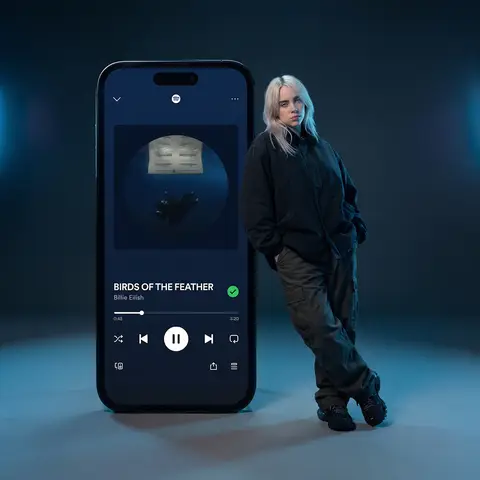
CHARACTER NAME or IMAGE: Enter the music artist name here. Goal: Generate a cinematic, dreamlike AR (Augmented Reality) visual featuring PERSONE as the central subject, surrounded by an orbiting system of floating music interface cards. 1. THE SUBJECT & DYNAMIC TRACKLIST - Character: A high-quality, realistic portrait of PERSONE as the central figure. - AI AUTOMATION (CRITICAL): Based on the name provided in PERSONE, identify their top 8 most popular songs. Automatically replace the placeholder list below with these real song titles. - Featured Tracks: Placeholder for songs like: century, rottweiler, 4 raws, phantom, mist, cali man, LV sandals. Each song title must appear on its own floating 3D interface card. 2. AR INTERFACE & CARDS - Style: Numerous 3D Spotify and Apple Music interface cards orbiting the subject at varying depths. - Material: Translucent frosted glass (glassmorphism) with soft rounded edges and subtle glowing borders. - Movement: Some cards are in the extreme foreground, partially obscuring PERSONE, while others drift into the distance behind the figure. - Visual Accents: Dynamic motion blur on the edges of the cards to suggest a swirling, orbiting movement. 3. LIGHTING & COMPOSITION - Lighting: Natural tones with enhanced professional photo quality. The soft glow from the interface cards subtly illuminates the face of PERSONE. - Focus: Strong depth of field. The background and extreme foreground cards are artistically blurred, keeping the focus sharp on the artist and the closest player interfaces. - Composition: A cinematic wide or medium shot that emphasizes the scale of the floating AR elements. 4. AESTHETIC - High-end editorial music photography, futuristic AR concept, clean and airy vibe. 8k resolution, sophisticated lighting, and realistic textures on the glass cards.

durs.ai
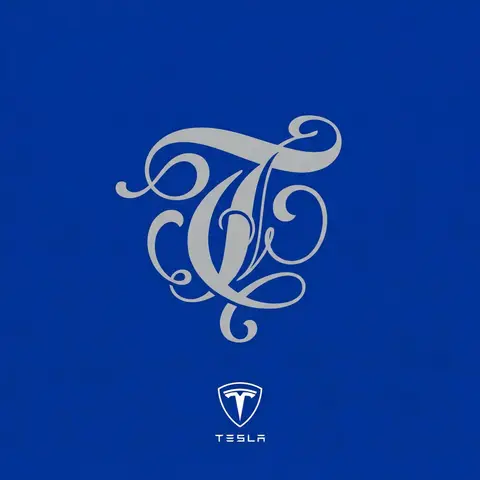
Monochromatic Shrink Wrap Logo CGI Render
LogoPhoto

Monochromatic Shrink Wrap Logo CGI Render

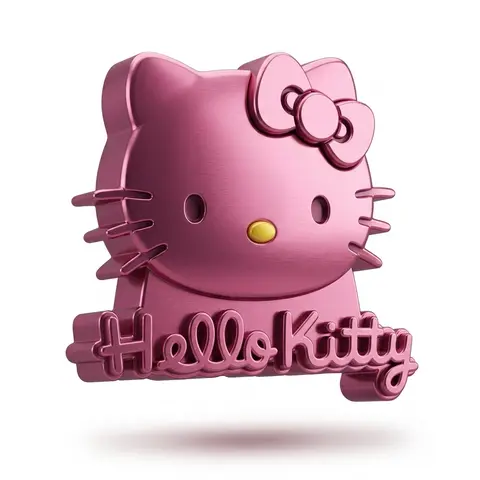
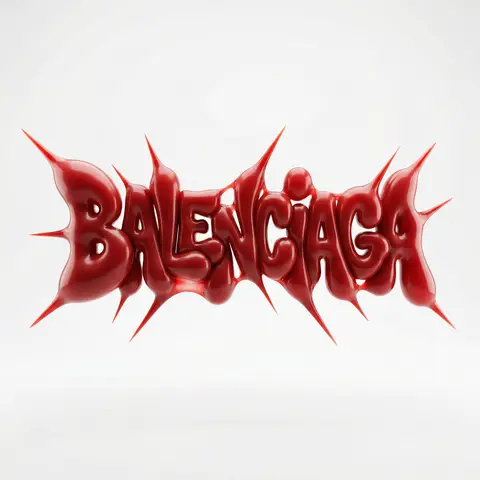
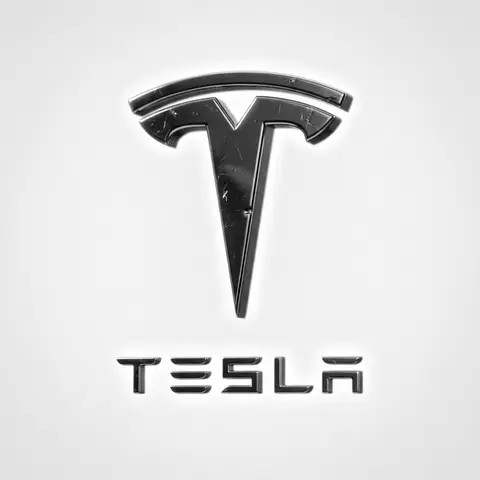
BRAND NAME + COLOR Act as a Senior CGI Artist specializing in shrink wrap simulation and 3D material rendering. Your task: render BRAND NAMEs complete logo — icon mark AND wordmark if the brand uses one — completely wrapped under a single layer of tight stretched plastic film or shrink wrap. The logo forms are visible only as raised shapes beneath the material, never exposed directly. BRAND INTELLIGENCE SYSTEM Before executing, resolve: (1) LOGO GEOMETRY — identify BRAND NAMEs complete visual identity mark — this includes both the icon symbol AND the wordmark/logotype if the brand uses them together. Render both elements as they appear in the brands official lockup. If the brand uses only an icon with no wordmark, render the icon only. If the brand uses a wordmark without an icon, render the wordmark only. Preserve the correct spatial relationship between icon and text as it appears in the real logo, (2) COLOR SYSTEM — based on COLOR, determine one single monochromatic tone that covers everything in the scene without exception — the wrapped object, the background surface, the film material — pure tonal unity with variation only through light and shadow, (3) FILM CHARACTER — based on COLOR determine the stretch film behavior: bright saturated colors become tight latex or glossy shrink wrap with visible tension lines, neutrals become matte stretch film like packaging plastic, darks become semi-transparent vacuum seal film, light colors become frosted cling wrap. PHASE 1: SCENE & SURFACE The entire scene is monochromatic — one single color COLOR covers every element without exception. The background is the same film material pooling and wrinkling loosely around the central wrapped object — a continuous surface of the same material with natural stress lines, crinkles, and soft folds radiating outward from where the film is pulled tightest over the logo forms. No floor line. No walls. No horizon. Just continuous film material in every direction filling the entire frame. PHASE 2: THE WRAPPED LOGO — CRITICAL BRAND NAMEs complete logo — resolved in the brand intelligence system — exists as solid three-dimensional inflated forms. Each element of the logo — every letter, every curve of the icon, every geometric element — is volumetrically inflated like a balloon, giving each component roundness and depth. The complete logo lockup sits on the background surface and is covered by a single continuous layer of stretch plastic film pulled tightly from above. The film conforms precisely to every raised logo element — stretching tightly over the peaks of each inflated letter and icon form, creating visible tension stress lines in the film where it is pulled most taut, and releasing into loose crinkled pools of excess material in the gaps between letters, in the negative spaces of the icon, and around the outer perimeter of the logo where the film relaxes back onto the background surface. The entire logo must remain fully legible through the film — every letter readable, the icon identifiable — but no surface of the actual logo is ever directly visible or exposed. Only the film surface exists. The physical behavior of the film must be accurate: tight stretch over high points, stress lines radiating from tension peaks, loose crinkle pools in valleys, the film slightly lifting off the surface in the spaces between raised elements creating small shadow gaps underneath. PHASE 3: LIGHTING Large soft area light from upper-left — diffused and broad. The lighting reveals the films topography: raised logo elements catch more light on their peaks, valleys and gaps between forms fall into progressively deeper shadow, background crinkled film shows its own shadow landscape of stress lines and folds. For glossy or latex film COLOR: add subtle specular highlights running along the highest tension points of the film — a tight line of brighter light along the films most stretched areas. For matte film COLOR: no specular, pure diffuse light only. Global illumination on — ambient light fills shadow areas enough to retain detail in the deepest folds without flattening the overall relief. TECH SPECS The entire image is one color — COLOR — applied to every surface with variation only through light and shadow. No other colors anywhere. No exposed logo surfaces. No additional text beyond what is part of BRAND NAMEs actual logo lockup. Film simulation must be physically accurate — real stretch film behavior, real tension dynamics, real crinkle patterns. No fabric look. No cloth drape. This is plastic film — it has different tension behavior than textile: tighter, more stressed, more geometric stress lines, less organic drape. Film grain: ISO 400 equivalent. Mood: a product sealed for shipping, a reveal imminent, the form known but not yet touched.
durs.ai